
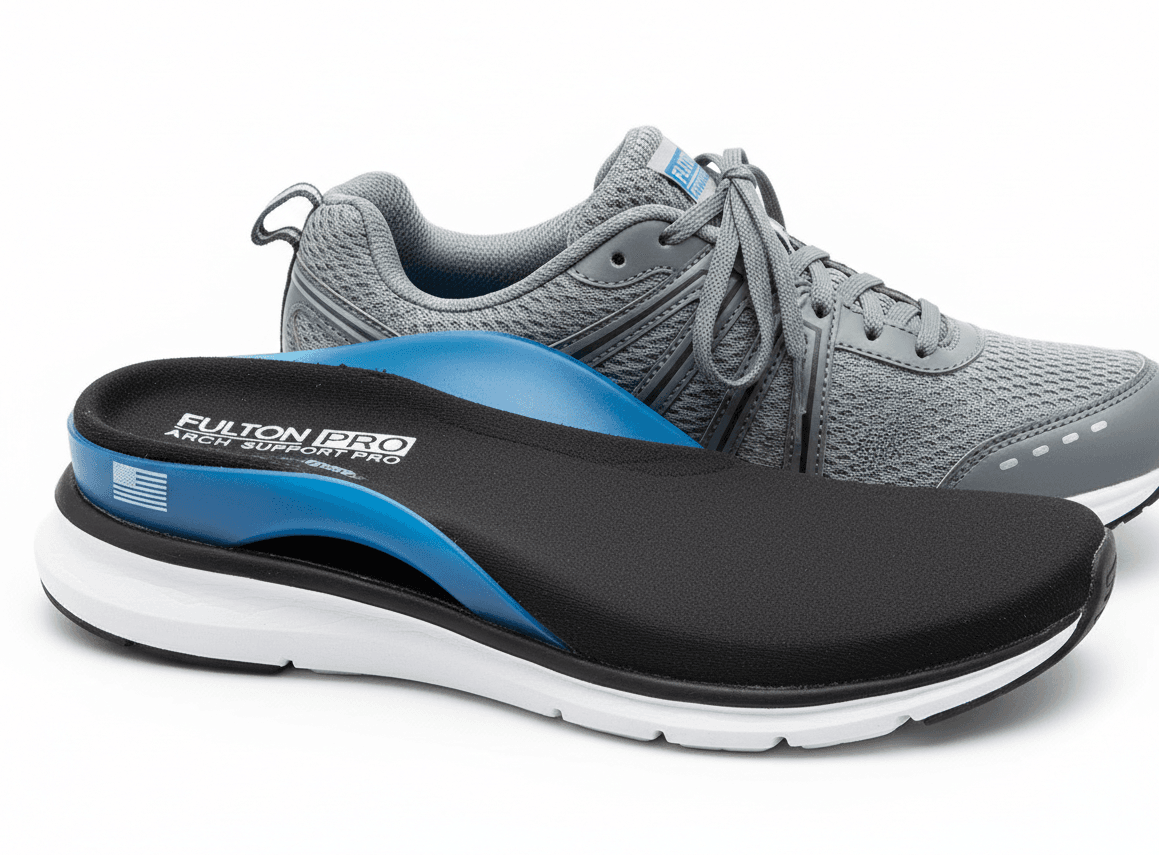
Why So Many People With Flat Feet Struggle to Find the Right Insole
Arch support insoles for flat feet are specially designed inserts that stabilize your foot, reduce overpronation, and relieve pain caused by low or absent arches.
Quick answer — what to look for:
| Feature | Why It Matters |
|---|---|
| Low arch height | Supports flat feet without overcorrecting |
| Deep heel cradle | Stabilizes ankles, reduces inward rolling |
| Firm (not soft) support | Corrects alignment better than cushy foam |
| Moisture-wicking top layer | Keeps feet dry during long shifts or runs |
| Full-length design | Distributes pressure evenly across the foot |
If your feet tire quickly, your heels ache after a long shift, or your knees feel off after a run — flat feet may be the root cause. When your arch collapses, it triggers a biomechanical chain reaction where every step sends misaligned force up through your ankles, knees, hips, and lower back.
That chain reaction is exactly why the right insole matters so much.
I’m Faisal S. Chughtai, a footwear comfort expert who has spent years researching the best arch support insoles for flat feet across running, walking, and all-day wear scenarios. Let’s break down exactly what your flat feet need — and which insoles actually deliver.
Quick look at arch support insoles for flat feet:
Understanding Flat Feet and Common Pain Points
To find the right solution, we first need to understand the anatomy of the problem. Flat feet, often referred to as “fallen arches,” occur when the longitudinal arch in the foot is low or entirely absent. This means that when you stand, the entire sole of your foot touches the floor.

There are two main types of flat feet. Some people have congenital flat feet, meaning they never developed an arch during childhood. Others experience fallen arches later in life. This happens when the posterior tibial tendon, which is the primary support structure for your arch, becomes weakened or damaged due to age, injury, or repetitive stress.
The symptoms of flat feet are rarely contained just to the bottom of the foot. According to research on flat feet symptoms, common pain points include:
- Heel Pain: Often felt as a sharp or dull ache in the back of the foot.
- Plantar Fasciitis: The lack of arch support puts excessive strain on the plantar fascia ligament, leading to inflammation.
- Knee and Ankle Strain: Because the foot rolls inward (overpronation), it forces the ankle and knee out of their natural alignment.
- Lower Back Misalignment: When the foundation of your body is tilted, it creates a “domino effect” that pulls on the hips and lower back.
If you’ve been feeling a “heavy” sensation in your feet or notice your shoes wearing out unevenly on the inner side, you likely need more structure. For a deeper dive into how different inserts address these issues, check out our guide on shoe inserts for flat feet 101.
How Arch Support Insoles for Flat Feet Work
Many people assume that because their feet are flat, they should avoid arch support entirely. In reality, the opposite is true. Arch support insoles for flat feet act as a functional scaffold. They don’t just “fill the gap”; they biomechanically shift how your foot interacts with the ground.
The primary goal of these insoles is overpronation correction. By providing a firm surface under the arch, the insole prevents the foot from rolling too far inward. This restores structural alignment to the entire leg.
Furthermore, high-quality insoles provide essential shock absorption. When an arch collapses, it loses its natural ability to act as a spring. Insoles with specialized materials like EVA foam or gel help take the “hit” so your joints don’t have to. Clinical evidence shows that structured support can lead to a significant plantar fascia strain reduction—in some cases by an average of 34%.
Beyond the foot, these devices provide:
- Achilles Tendonitis Relief: By stabilizing the heel, they reduce the tugging motion on the Achilles tendon.
- Shin Splints Prevention: Better alignment means the muscles in your lower leg don’t have to work overtime to stabilize your gait.
If you are looking to improve your performance and comfort, you can step up your game with the best arch support inserts designed for high-impact activities. You can also learn more about the basic mechanics in our arch support inserts 101 article.
The Difference Between Low, Medium, and High Arch Support Insoles for Flat Feet
One of the biggest mistakes we see is people with flat feet buying “High Arch” insoles thinking “more is better.” This often leads to bruising and intense discomfort because the high arch height is too aggressive for a foot that sits naturally low.
- Low Arch Support: This is the “sweet spot” for most people with flat feet. These insoles provide a gentle lift that supports the foot without causing pressure points.
- Medium Arch Support: Some people with “flexible” flat feet (where an arch appears when the foot is off the ground) find that a medium arch support provides the firm correction they need to prevent collapse during movement.
- High Arch Support: Generally avoided for flat feet, as these are designed for feet with very high, rigid arches that need to fill a large void.
The key is finding firm vs. soft support. While soft, “squishy” gel feels good for the first five minutes, it doesn’t provide the structural integrity required to stop overpronation. A firm stabilizer cap is much more effective for long-term pain relief. For those wearing specific brands like On, we have a specialized guide on finding your perfect fit: a guide to On Cloud arch support.
Key Features of the Best Insoles for Fallen Arches
When shopping for arch support insoles for flat feet, look for these specific components that separate a medical-grade orthotic from a basic drug-store pad. A quality insole should provide a structured skeleton that reinforces the foot’s natural shape.
- Deep Heel Cradle: This is vital. It “cups” the fatty tissue under your heel, maximizing natural shock absorption and preventing the heel from sliding side-to-side.
- Metatarsal Pads: These are small raised areas behind the toes that help spread the bones in the forefoot, relieving pressure and preventing “hot spots.”
- Moisture-Wicking Fabric: If you are standing all day, you need a top layer that manages sweat and bacteria to prevent odor.
- TPU Stabilizer: A hard plastic (TPU) base provides the “skeleton” of the insole, ensuring it doesn’t flatten out under your body weight.
Comparison of Insole Materials
| Material | Best For | Pros | Cons |
|---|---|---|---|
| Foam (EVA/Aerolyte) | Running/Walking | Lightweight, responsive | Can compress over time |
| Gel | Standing all day | Excellent impact reduction | Heavy, lacks structural support |
| TPU/Carbon Fiber | Severe Overpronation | Maximum stability, durable | Can feel very rigid initially |
For those who prioritize pure comfort during long shifts, ComfortLast Cushioning Gel Insoles offer a great balance of shock absorption and anatomical support.
Custom Moldable vs. Ready-to-Wear Arch Support Insoles for Flat Feet
Should you buy an “off-the-shelf” insole or go for something custom?
Ready-to-Wear insoles are engineered based on thousands of foot scans. They are affordable and work for the majority of people. Brands like FitVille Arch Support offer ergonomic designs that are ready to go right out of the box.
Custom Moldable insoles (like SOLE or certain heat-moldable Superfeet) offer the best of both worlds. You can actually put these in your oven for a few minutes and then stand on them to create a 100% personalized map of your foot. This technology is clinically proven to reduce plantar fascia strain by an average of 34%. If you want to give your favorite shoes a lift with arch support inserts that feel like they were made just for you, moldable options are the way to go.
Top-Rated Arch Support Insoles for Flat Feet Compared
We’ve tested dozens of models to see which ones actually hold up for the flat-footed community. By comparing the stability, arch height, and durability of the leading brands, we have identified the top contenders for daily support:
1. PowerStep Pinnacle Low
This is often cited as the #1 podiatrist-recommended brand for a reason. The PowerStep Pinnacle Low for Flat Feet features a lower-profile arch support shell specifically designed for fallen arches. It provides a perfect blend of a firm support shell and plush cushioning.
2. Superfeet All-Purpose Low Arch
Previously known as Superfeet Black, this is a legendary low-profile insole. It is thin enough to fit into tight-fitting shoes (like dress shoes or cleats) while still providing the firm stabilizer cap Superfeet is known for. It has even earned the APMA Seal of Acceptance.
3. Tread Labs Pace
Tread Labs is unique because they offer four different arch heights. Their “Low” height is a game-changer for people with very flat feet who find other brands too painful. They also feature a two-part system where you only replace the top foam cover, making them a sustainable long-term choice.
4. Superfeet Run Cushion Low Arch
Specifically designed for athletes, the Run Cushion Low Arch for Running uses Adaptive Comfort Technology. This allows the insole to flex with your foot’s natural motion, providing support during the “heel-to-toe” transition without feeling like a stiff board. If you’re looking for footwear to pair these with, check out our guide on the best running shoes for flat feet and overpronation.
Finding Your Perfect Fit and Breaking Them In
Buying the insole is only half the battle; you also have to ensure it fits your shoe and your foot correctly.
The Footprint Test
To determine your arch height at home, wet the bottom of your foot and stand on a piece of cardboard.
- Flat Foot: You see the entire footprint, including the “waist” (the middle part).
- Neutral Arch: You see about half of the arch area.
- High Arch: You only see the heel and the ball of the foot.
Trimming Your Insoles
Most high-quality arch support insoles for flat feet come in size ranges (e.g., Men’s 8-9). You will likely need to trim them to fit your specific shoe. To do this correctly, align the heel of your new insole with the heel of your shoe’s original factory liner.
Pro Tip: Do not guess! Remove the original factory liner from your shoe, place it on top of the new insole, and trace the toe area with a pen. Use sharp scissors to trim along that line.
The Break-In Period
Your feet have likely been “collapsing” for years. Forcing them into a neutral position will feel strange at first. Most experts recommend a 1-3 day adjustment period. Wear them for 2 hours the first day, 4 hours the second, and so on. If you experience sharp pain, stop. It’s important to know when to consult a podiatrist rather than trying to power through significant discomfort.
Lifespan and Replacement
Even the best insoles don’t last forever. Most should be replaced every 6 to 12 months, depending on your activity level. If the foam looks compressed or the fabric is peeling, it’s time for a new pair. Don’t let flat feet keep you down with these inserts—staying on top of replacements ensures your alignment stays consistent.
Frequently Asked Questions about Flat Feet Insoles
Do insoles really help with overpronation?
Yes. By providing a firm “stop” under the arch, insoles prevent the foot and ankle from rolling inward. This repositioning helps align the knees and hips, significantly reducing the risk of injury.
How long do arch support insoles typically last?
Most high-quality orthotics last between 6 and 12 months. If you are a heavy runner or spend 12+ hours a day on your feet (like a nurse), you may need to replace them every 4-6 months to maintain optimal support.
Can I move my insoles between different pairs of shoes?
Absolutely. As long as the shoes have a similar shape and a removable factory liner, you can swap your insoles between your work boots, running shoes, and casual sneakers.
Conclusion
Finding the right arch support insoles for flat feet is one of the best investments you can make for your long-term health. By stabilizing your foundation, you aren’t just fixing foot pain—you’re protecting your knees, hips, and back from years of unnecessary wear and tear.
At On Clouder, we specialize in comfort rankings and performance reviews to help you navigate these choices. Whether you are a marathoner or someone who just wants to walk the dog without pain, there is a solution out there for you.
For more community-driven advice, check out our roundup of the best arch support shoes according to Reddit or find the best arch support for runners to keep your training on track. Your feet do a lot of work for you—it’s time you gave them the support they crave.
