
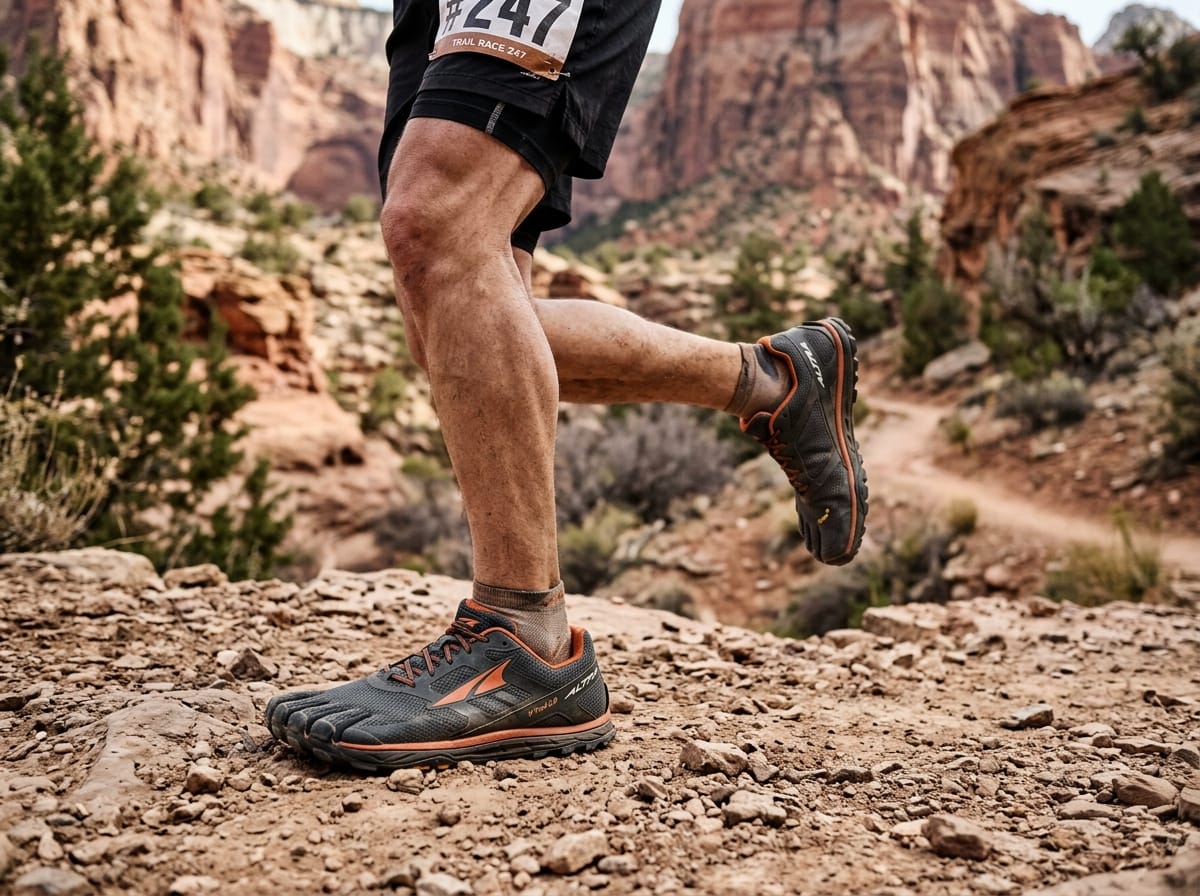
What Are Zero Drop Running Shoes (And Should You Switch)?
Zero drop running shoes keep your heel and forefoot at the exact same height — a 0mm difference, compared to the 8-12mm raised heel you find in most traditional running shoes.
Here’s a quick breakdown:
| Feature | Traditional Shoes | Zero Drop Shoes |
|---|---|---|
| Heel-to-toe drop | 8-12mm | 0mm |
| Foot position | Heel elevated | Heel and toe level |
| Strike pattern | Encourages heel strike | Encourages midfoot/forefoot strike |
| Best for | Cushioned long runs | Natural gait, foot strength |
| Transition needed? | No | Yes — gradual |
Zero drop shoes are not the same as minimalist or barefoot shoes. You can get zero drop with plenty of cushioning (think 27-35mm stack height). The key difference is just that flat, level platform underfoot.
Most runners who try them notice two things right away: their calves work harder, and their stride feels more natural. That’s not a bug — it’s the point.
But switching too fast can cause real problems. Achilles pain, calf tightness, and fatigue are common if you jump in without a plan.
This guide walks you through everything — from how zero drop shoes actually work, to the best models for road, trail, and budget shoppers, to a safe transition strategy.
I’m Faisal S. Chughtai, a footwear expert with hands-on experience testing and reviewing zero drop running shoes across brands, terrains, and foot types. I’ll cut through the marketing claims and give you only what you need to make the right call.
Understanding the Zero Drop Philosophy
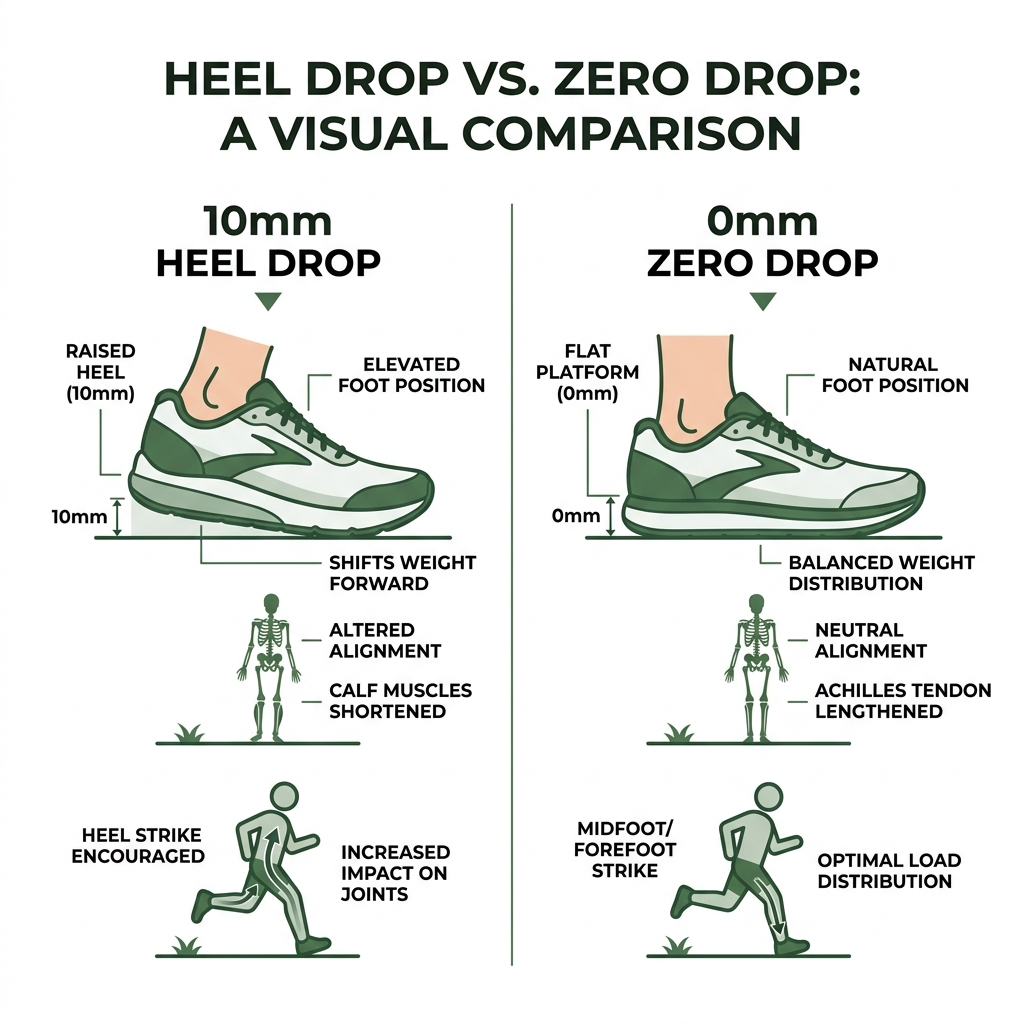
At its heart, the philosophy of zero drop running shoes is about returning the foot to its natural, evolutionary state. Most modern footwear acts like a “staircase” for your feet, with the heel jacked up significantly higher than the toes. This constant downward slope shortens the Achilles tendon and alters your center of gravity.
When we talk about “Natural Alignment,” we are referring to a platform where the heel and forefoot are equidistant from the ground. This mimics the geometry of a bare foot. However, a zero-drop platform is often paired with two other critical design elements:
- FootShape Comfort: Unlike the pointed, narrow toe boxes of traditional sneakers that “smush” your toes together, most zero-drop brands utilize a wide toe box. This allows for natural toe splay, where the big toe can stay straight and the other toes can fan out. This significantly improves stability and power during toe-off. You can learn more about this in our guide to barefoot wide toe box shoes.
- Balanced Cushioning: This is the idea that protection should be equal across the foot. In the lab, we follow the official guidelines of World Athletics to measure these heights. We measure the heel at 12% of the shoe’s internal length and the forefoot at 75%. While many brands claim a “zero drop,” lab tests sometimes find minor variances (like 0.1mm to 1.4mm), but the goal remains a level plane that supports a natural gait.

The Core Benefits of Natural Alignment
Why would you want to ditch the heel lift? It isn’t just a trend; it’s about biomechanics. When your heel is level with your forefoot, your body naturally seeks a midfoot or forefoot strike pattern.
- Reduced Knee Stress: By shifting the strike away from the heel, you reduce the jarring “braking force” that travels up to the knee. Research suggests better running form is possible because zero-drop shoes can ease stress on the knee joints by encouraging a more vertical load distribution.
- Improved Posture: An elevated heel tilts the pelvis forward, often leading to lower back strain. A flat platform encourages a more upright, stacked posture from the ankles to the shoulders.
- Achilles and Calf Strengthening: In a traditional shoe, your calf muscles and Achilles tendons are perpetually shortened. Moving to a zero-drop model allows these tissues to stretch and load as nature intended. While this requires a transition period, it ultimately leads to a more resilient lower leg.
- Enhanced Proprioception: Especially in models with lower stack heights, you get a better “feel” for the ground. This sensory feedback allows your brain to make micro-adjustments in balance, which is why Altra shoes for running and hiking are so popular among those tackling uneven trails.
How to Safely Transition to Zero Drop Footwear
We cannot stress this enough: Do not go for a 10-mile run in zero drop running shoes on day one. If you’ve spent 20 years in 12mm drop shoes, your calves and Achilles are literally shorter than they should be. Stretching them out suddenly under the high impact of running is a recipe for injury.
Here is our recommended strategy for a safe switch:
- The “Wear Around the House” Phase: Start by wearing your new shoes as daily walkers. Use them for grocery runs or short walks with the dog. This begins the gentle stretching of the posterior chain.
- The Rotation Strategy: Do not throw away your old shoes. Use your zero drop running shoes for 10-20% of your weekly mileage initially. For your long runs, stick to what you know. Over 4-6 weeks, slowly increase the percentage. Check out our zero drop footwear guide for more rotation tips.
- Strengthening Exercises: Incorporate eccentric heel drops (lowering your heel slowly off a step) and toe scrunches to build the intrinsic foot strength required for these shoes.
- Listen to Your Body: Calf tightness is normal; sharp pain in the Achilles or the arch (plantar fascia) is not. If you feel pain, back off.
Many runners find inspiration in the book Born to Run, which famously highlighted the benefits of natural movement. While motivating, the athletes in that book grew up moving naturally—most of us didn’t. For more on the technical side of this shift, explore our minimalist shoes transition articles.
Top Rated Zero Drop Running Shoes for Every Runner
The market for zero drop running shoes has exploded, moving far beyond “barefoot” socks to include high-tech, cushioned racers. Here are our top picks based on lab testing and real-world miles.
- Altra Torin 8: This is the gold standard for road running. In our tests, it measured at a true -0.1 mm drop. With a 27.6mm stack height, it offers plenty of “Standard” FootShape comfort without feeling mushy. It’s 13.7% wider than the average running shoe, making it a dream for those with wide feet.
- Merrell Vapor Glove 6: If you want “ground feel,” this is it. It is 40.2% lighter than the average trail shoe and 92.2% more flexible. It’s essentially a protective second skin for your foot.
- INOV8 Roadfly Zero: A speedster for the pavement. It uses a 12mm stack height (level at both ends) and a BOOMERANG footbed that provides roughly 40% energy return. It’s designed for those who want to run fast with a natural gait.
- Vivobarefoot Motus: Excellent for those who want a shoe that transitions from the gym to a short run. It offers a “Leather Studio” version for durability and a “Flex” version for maximum movement. For a deeper dive into this brand, see our Altra brand comparison and brand-specific reviews.
Best Budget Zero Drop Running Shoes
You don’t have to spend $160 to experience the benefits of a level platform.
The WHITIN Men’s Zero Drop Running Shoes have become a cult favorite, boasting a 4.3-star rating from thousands of users. They offer a wide toe box and a removable insole, making them an excellent “entry-level” shoe for those curious about the minimalist shoe options available today.
Another heavy hitter is the Xero Shoes Prio. At approximately $90, it is 36.6% cheaper than the average zero-drop shoe. It is incredibly flexible (73.3% more so than average) and comes with a 5,000-mile sole warranty, offering incredible value for a high-performance shoe.
Best Trail Zero Drop Running Shoes
Trail running is where the zero-drop philosophy truly shines, as a lower, level heel provides better stability on technical terrain.
- Altra Lone Peak 9: This is a legend in the trail community. It features 3.8mm lugs for grip and a 25mm stack height. Our lab tests showed an energy return of nearly 58%, meaning it doesn’t just protect you from rocks—it helps push you forward.
- INOV8 Mudtalon Zero: When things get sloppy, the Mudtalon takes over. It features aggressive lugs and a Graphene-GRIP outsole, which is scientifically proven to be harder-wearing and grippier than standard rubber. It’s built for “fell running” and extreme mud.
For more trail-specific advice, see our page on Altra trail footwear.
Technical Metrics: Cushioning and Stack Height
A common myth is that all zero drop running shoes are thin and hard. In reality, stack heights (the amount of material between your foot and the ground) vary wildly.
| Shoe Model | Stack Height (Heel/Toe) | Weight | Energy Return |
|---|---|---|---|
| Altra VIA Olympus 2 | 34.8mm / 35.0mm | 11.4 oz | High (Soft Midsole) |
| Altra Torin 8 | 27.6mm / 27.7mm | 8.3 oz | 57.9% |
| Altra Lone Peak 9 | 25.0mm / 25.0mm | 10.1 oz | 57.6% |
| Xero Shoes Prio | 11.0mm / 11.0mm | 7.6 oz | Minimal (Ground Feel) |
| Merrell Vapor Glove 6 | 6.0mm / 6.0mm | 5.6 oz | Minimal (Barefoot) |
Key Insights from the Lab:
- Shock Absorption: On average, zero-drop shoes have a shock absorption score of 91.7 (heel) compared to 127.2 for traditional high-drop shoes. This means your body (muscles and tendons) does more of the work, while the shoe does less.
- Midsole Softness: Some models, like the VIA Olympus 2, feature midsoles that are 32.2% softer than the average shoe, proving you can have zero drop and maximalist comfort.
- Durability: Interestingly, our research shows that lower stack height shoes (21-23mm) often have better long-term durability (67% rated excellent) than “super-cushioned” models (31% rated excellent), likely due to the compression of foam over time. For those seeking a purely barefoot experience, we recommend checking out Vivo barefoot shoes.
Frequently Asked Questions about Zero Drop Footwear
What is the difference between zero drop, minimalist, and barefoot shoes?
- Zero Drop: Refers only to the height difference between heel and toe (0mm). These can be thick and cushioned.
- Minimalist: Usually zero drop, but also lightweight, highly flexible, and with a lower stack height (under 20mm).
- Barefoot: The extreme end of minimalist. These have very thin soles (3-6mm), no arch support, and no cushioning, designed to provide maximum ground feel.
Are zero drop shoes suitable for walking and gym workouts?
Absolutely. In fact, many experts like Dr. Mark Cucuzzella recommend them for strength training. Because they lack a chunky, squishy heel, they provide a stable, grounded base for squats, deadlifts, and overhead presses. For walking, they help maintain natural posture, though the same transition rules apply.
Who should avoid zero drop running shoes?
If you have existing, acute foot pain—such as a severe flare-up of plantar fasciitis or a recent Achilles tear—you should consult a professional before switching. Additionally, those with very rigid high arches or specific orthopedic requirements may find the transition more difficult. However, as PT Jen Fraboni notes, if you aren’t in pain and just want to improve foot health, it is a great time to start trying them.
Conclusion
At On Clouder, we believe that understanding your footwear is the first step toward better performance and fewer injuries. Zero drop running shoes offer a compelling path toward a more natural, powerful gait, but they are a tool that must be used correctly.
Whether you choose the plush comfort of the Altra Torin 8 or the “second-skin” feel of a Xero or Merrell model, the goal is the same: allowing your foot to function as it was designed. Remember to transition slowly, strengthen your calves, and listen to your body’s feedback.
Ready to take the next step in your footwear journey? Check out our analysis of The Evolution of the Modern Step: Breathable Work Shoes to see how natural design is influencing every part of the shoe industry. Happy running!
