
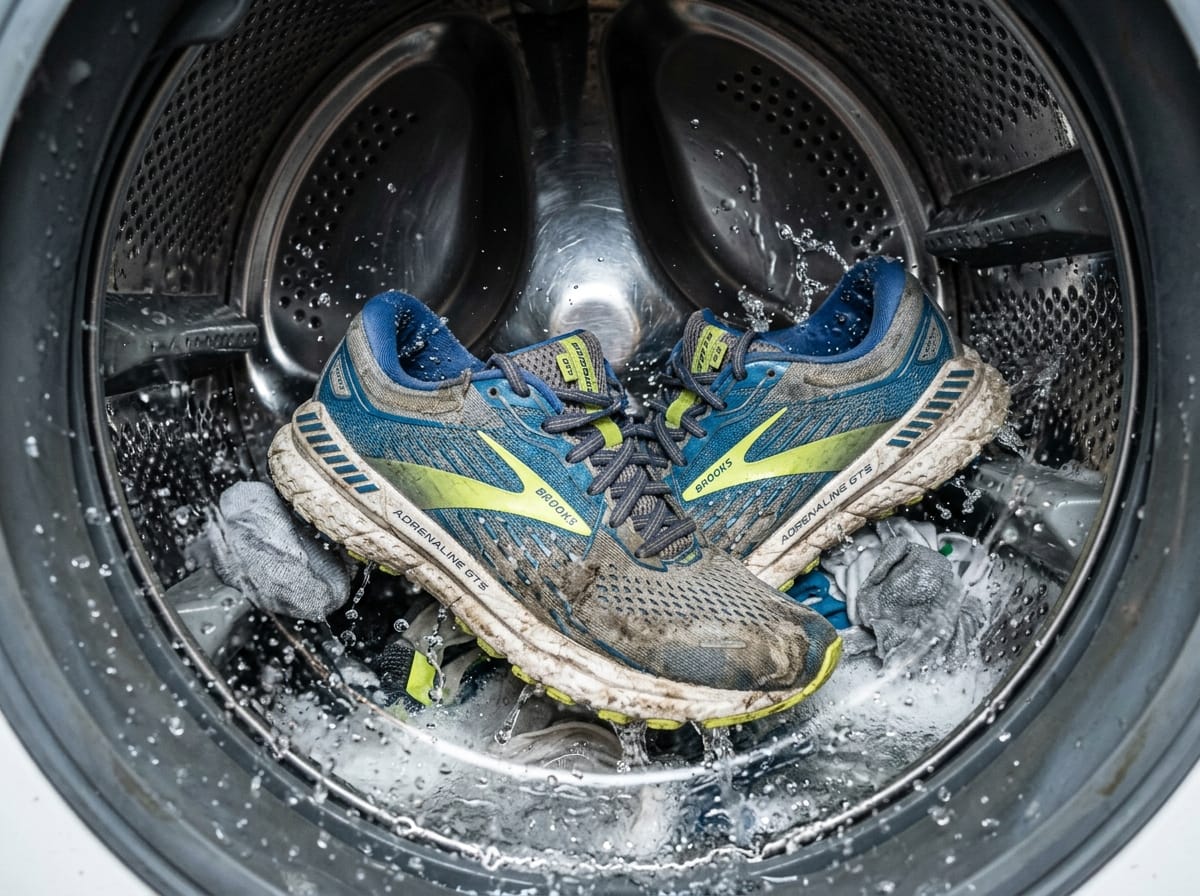
Machine Washing Brooks Shoes: The Quick Answer You Need
Can you wash brooks tennis shoes in the washing machine? Technically yes — but Brooks officially recommends against it, and for good reason.
Here’s the short answer:
| Method | Safe? | Recommended? |
|---|---|---|
| Machine washing | Risky | No — voids warranty, damages structure |
| Hand washing | Yes | Yes — Brooks’ official method |
| Machine drying | No | Never |
| Air drying | Yes | Always |
The bottom line:
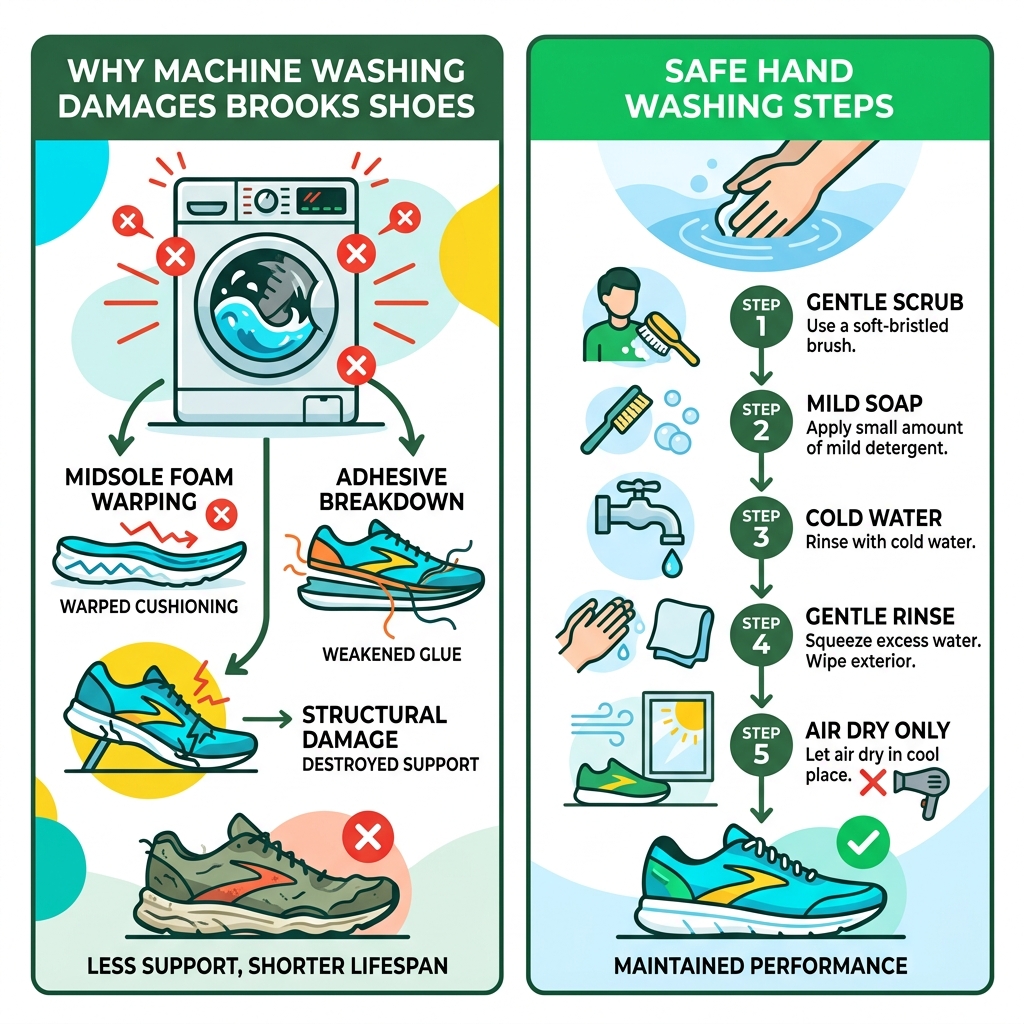
- Machine washing can warp the midsole foam, break down adhesives, and destroy the cushioning that makes Brooks shoes worth buying
- Brooks’ official guidelines explicitly advise against using a washer or dryer
- Hand washing with a soft brush, mild detergent, and cold water is the safe alternative
- Always air dry — never use heat
This matters most if you’re on your feet all day or logging serious miles. Damaging your shoe’s structure means less support, more pain, and a shorter lifespan for a shoe you likely paid good money for.
I’m Faisal S. Chughtai, a footwear performance expert who has spent years helping runners and active professionals navigate questions like can you wash brooks tennis shoes in the washing machine without accidentally destroying their favorite pair. In this guide, I’ll walk you through exactly what happens when you machine wash Brooks shoes — and the right way to keep them clean and performing at their best.
Why You Should Never Wash Brooks Tennis Shoes in the Washing Machine
We get it. You just finished a grueling trail run or a long shift at the hospital, and your Brooks are covered in a layer of grime that makes them look five years older than they are. The temptation to just “toss them in” with the towels is real. However, treating your performance footwear like a pair of cotton socks is a recipe for heartbreak.
According to the official What is the best way to clean my shoes? – Brooks Running documentation, the mechanical action of a washing machine is far too aggressive for the technical materials used in modern running shoes. When you submerge these shoes and subject them to a high-speed spin cycle, you aren’t just cleaning them; you are fundamentally altering their DNA.
The most immediate consequence is warranty voidance. Brooks builds their shoes to withstand hundreds of miles of impact, but they do not build them to survive the industrial agitation of a top-loader. If the upper separates from the sole after a machine wash, you’re on your own. Beyond the legalities, the heat and chemicals often cause adhesive breakdown. The glues holding the multi-layered midsole together can soften, leading to delamination—where the shoe literally starts peeling apart like an onion.
| Feature | Hand Washing Impact | Machine Washing Impact |
|---|---|---|
| Cushioning | Preserved; stays soft and responsive | Compressed; foam loses “bounce” |
| Shape | Maintained via careful handling | Risk of warping or “toe curling” |
| Adhesives | Safe with cool/lukewarm water | High risk of delamination/peeling |
| Warranty | Remains intact | Usually voided immediately |
| Lifespan | Can extend to 500-700 miles | Often shortened by 100+ miles |
The structural risks when you wash brooks tennis shoes in the washing machine
The “magic” of a Brooks shoe lies in its midsole foam—technologies like DNA LOFT or BioMoGo DNA. These are non-Newtonian fluids or specialized EVA foams designed to react to your weight and stride. When you wash brooks tennis shoes in the washing machine, the foam cells can become saturated and compressed. This leads to premature foam fatigue, meaning that $150 pair of shoes suddenly feels like a $20 pair of flat sneakers.
Furthermore, the friction damage inside the drum can fray the engineered mesh. Brooks uses specific weave patterns to provide breathability and targeted support. The tumbling action acts like sandpaper, weakening the fibers and leading to “blowouts” near the pinky toe. You also risk a total loss of elasticity in the heel counter, which is vital for preventing blisters and keeping your foot locked in place.
Final verdict: can you wash brooks tennis shoes in the washing machine?
While some internet forums suggest you can get away with it by using a “delicate” cycle and cold water, our expert stance at On Clouder aligns with the manufacturer. The How to Clean Running Shoes at Home | Brooks Running guide is clear: avoid the machine.
It isn’t just about the shoes, either. Heavy sneakers banging around in a drum can actually damage your appliance’s balance or chip the coating on the drum. Performance degradation is inevitable; even if they look clean on the outside, the internal structure—the part that protects your knees and back—is compromised.
The Proper Hand-Washing Method for Brooks Shoes
Now that we’ve established the “Why Not,” let’s talk about the “How To.” Hand washing is the gold standard. It allows you to be surgical with your cleaning, applying pressure only where it’s needed while keeping the delicate foam dry.
Before you touch water, you need to prepare.
- Remove the Laces: This allows you to clean the tongue area thoroughly.
- Remove the Insoles (Liners): These hold the most odor and moisture. Cleaning them separately is non-negotiable.
- Dry Brush: Use a soft-bristled brush to knock off loose dirt, dried mud, or dust. Doing this while the shoe is dry prevents you from just rubbing mud deeper into the mesh fibers.
For the cleaning solution, we recommend a simple mix of mild dish soap or a specialized sneaker cleaner with lukewarm water. Avoid harsh detergents or bleach, as these can strip the colors and weaken the synthetic overlays.
Cleaning the outsoles and midsoles
The bottom of your shoe—the outsole—is where the heavy lifting happens. For trail runners, caked-on mud in the lugs isn’t just an aesthetic issue; it’s a safety hazard. Mud reduces traction, significantly increasing your risk of slipping.
Use a stiffer brush (an old toothbrush works wonders here) to scrub the grooves of the outsole. If you have white midsoles that have turned a dingy grey, a bit of extra elbow grease with a soapy sponge can restore that “out of the box” brightness. Maintaining the integrity of these treads ensures you get the full 300-500 miles of grip the shoe was designed for.
Caring for mesh and synthetic uppers
The upper part of the shoe requires a gentler touch. Use a soft cloth or a very soft brush dipped in your soapy solution. Instead of soaking the whole shoe, use a “dabbing” or circular scrubbing motion on stained areas.
For mesh, be careful not to scrub so hard that you “fuzz” the fabric. If you’re dealing with stubborn odors, a 50/50 mixture of water and white vinegar can act as a natural disinfectant without damaging the fabric. Once you’ve finished scrubbing, use a clean, damp cloth to “rinse” the soap away. Never hold the shoe under a running faucet or submerge it in a bucket; the goal is to keep the internal foam as dry as possible.
How to Properly Dry Your Brooks Shoes Without Damage
Drying is the stage where most people make their second biggest mistake: using heat. Never put your Brooks in the dryer. The high heat will shrink the synthetic materials and warp the foam, effectively ruining the fit. Similarly, don’t leave them on a radiator or in direct sunlight, as UV rays and intense heat can cause the colors to fade and the lamination to peel.
The best way to dry your Brooks is the “Newspaper Method”:
- Stuff them: Crumple up plain newsprint (avoid glossy ads with heavy ink) or paper towels and stuff them tightly into the shoes. This absorbs moisture from the inside out and helps the shoe maintain its shape.
- Ventilate: Place the shoes in a cool, dry room with good airflow. A mudroom or a spot near a fan is perfect.
- Patience: Air drying is not a fast process. It typically takes 24 to 48 hours for a shoe to be completely dry. If you live in a humid climate, it might take up to three days.
Using this method ensures the elasticity and softness of the cushion remain intact. If you’re a daily runner, this is why we always suggest having a second pair of shoes in your rotation—one pair can dry while the other hits the pavement.
Maximizing Longevity and Knowing When to Replace
A well-maintained pair of Brooks should last between 300 and 500 miles. However, statistics show that runners who clean their shoes regularly and rotate between two pairs can often stretch that lifespan to 500-700 miles. Regular cleaning prevents grit from acting like sandpaper inside the mesh, which stops premature tearing.
But even the cleanest shoe eventually dies. You should consider replacing your Brooks when:
- The midsole shows heavy creasing or feels “dead” and flat.
- The tread on the outsole is worn smooth in high-impact areas.
- You start experiencing new aches in your feet, knees, or hips after a run.
- The heel counter has collapsed and no longer holds your foot securely.
Cleaning can make them look new, but it can’t fix “tired” foam. Always prioritize your joint health over the aesthetics of the shoe.
Frequently Asked Questions about Brooks Shoe Care
How often should I clean my Brooks shoes?
For road runners, a deep clean every 40-50 miles (or every 2-3 weeks) is usually sufficient to manage odor and sweat buildup. Trail runners should clean their shoes after every muddy or exceptionally dusty run to ensure the debris doesn’t degrade the traction or the mesh.
Can I wash Brooks insoles separately?
Absolutely—and you should! The insole (or sock liner) is a magnet for bacteria. Remove them and hand wash with mild soap and a cloth. Rinse them thoroughly and let them air dry completely before putting them back in. This is the single most effective way to eliminate “stinky shoe” syndrome.
What cleaning products are safe for Brooks materials?
- Safe: Mild dish soap, specialized sneaker cleaners (like SneakERASERS), white vinegar (for odors), and baking soda (for stains).
- Unsafe: Bleach, heavy-duty laundry detergents, fabric softeners, and any solvent-based cleaners. These will eat away at the technical glues and synthetic fibers.
Conclusion
So, can you wash brooks tennis shoes in the washing machine? You now know that while the machine might seem like a time-saver, it is ultimately a “recipe for disaster” for your performance footwear. By choosing the hand-washing route, you protect your investment, maintain the life-saving cushioning of the midsole, and ensure your Brooks perform exactly how they were engineered to.
At On Clouder, we believe that your shoes are the most important piece of equipment you own. Treat them with a little TLC, keep them away from the spin cycle, and they’ll carry you through many more miles of comfort. If you’re looking for more tips on maintaining your favorite sneakers or finding your next perfect pair, check out our step-by-step guide to the best way to clean sports shoes or our specialized guide on how to wash On Cloud shoes.
Ready for a new pair that doesn’t have 500 miles of road grime? Explore our step-by-step guide to finding the perfect fit. Happy running!
