
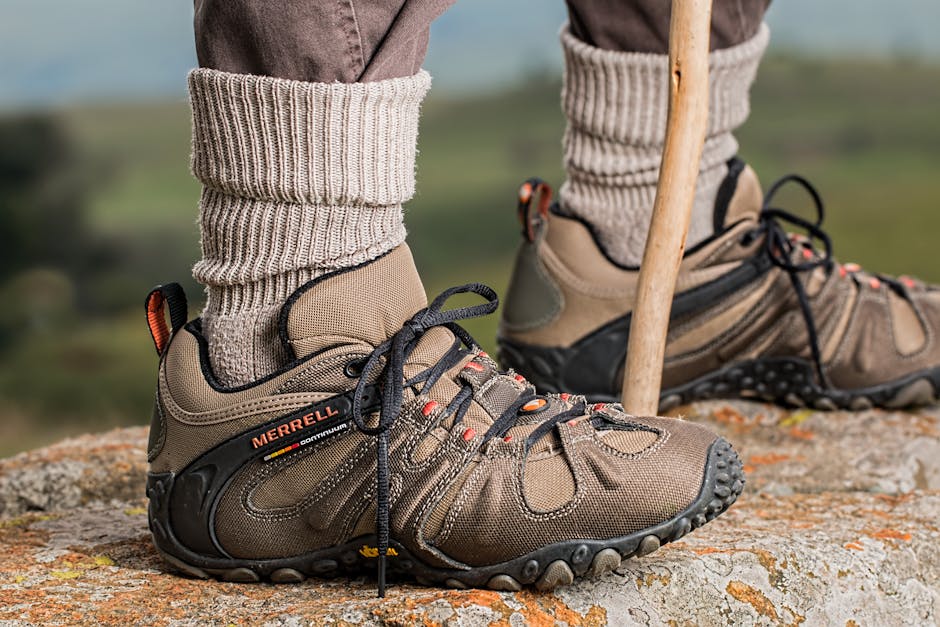
Why Your Feet Are Suffering on the Trail (And How to Fix It)
Big toe box hiking shoes are the solution for hikers who deal with blisters, cramped toes, or black toenails on long trails. Here are the top options in 2025:
| Shoe | Toe Box Width | Best For |
|---|---|---|
| Altra Olympus 6 | 80.5 mm | Stability & cushioning |
| Inov8 Trailfly Zero | 78.1 mm | Zero-drop, lightweight |
| KEEN Seek | 77.7 mm | Durability, technical trails |
| Nike Wildhorse 10 | 75.4 mm | Shock absorption |
| Merrell Moab Speed 2 | 75.1 mm | All-around comfort |
For context, the average hiking shoe toe box measures just 72.5–74.6 mm at the big toe. Every shoe above beats that — often by a significant margin.
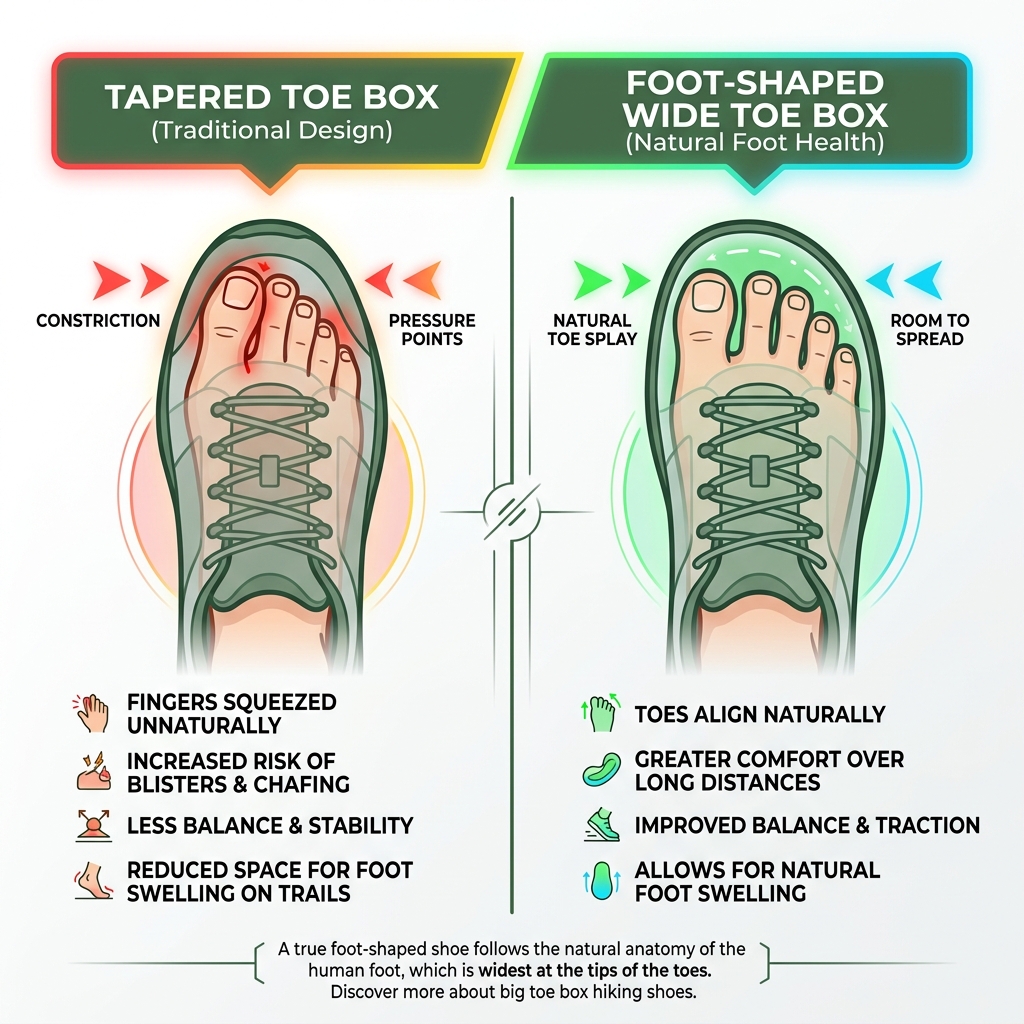
Most hiking shoes taper toward the front. That forces your toes into an unnatural squeeze. On long hikes, feet swell. The squeeze gets worse. The result? Blisters, bruised toenails, and real pain that cuts your adventure short.
A roomy toe box lets your toes spread naturally. That means better balance, less friction, and a lot more comfort over miles of trail.
The difference is bigger than it sounds. Lab measurements using gel molds show that interior toe box width can be 7–10 mm narrower than the outside of the shoe looks. So visual inspection alone doesn’t tell you much — the numbers matter.
I’m Faisal S. Chughtai, a footwear performance expert who has spent years researching and reviewing hiking shoes — including big toe box hiking shoes — to help people find the right fit for their feet and their trails. In this guide, I’ll walk you through the top-rated options, the key specs to look for, and how to find the right fit for your foot type.
The Science of Foot Health and Big Toe Box Hiking Shoes
When we talk about big toe box hiking shoes, we aren’t just talking about “wide” shoes. Many traditional “wide” shoes are simply scaled up, meaning they are wider at the ball of the foot but still taper sharply at the toes. A true foot-shaped shoe follows the natural anatomy of the human foot, which is widest at the tips of the toes.
When your toes are squished into a tapered shoe, several painful conditions can arise. One of the most common is the development of bunions, where the big toe is forced inward, causing the joint to protrude. This is why wide toe box shoes are a game changer for bunions, as they remove the lateral pressure that aggravates the joint.
Other issues include:
- Blisters: Friction occurs when toes rub against each other or the side of the shoe.
- Black Toenails: Often caused by the toes hitting the front or top of a cramped toe box during steep descents.
- Morton’s Neuroma: A thickening of the tissue around the nerves leading to the toes, caused by compression.
- Ingrown Nails: Constant pressure on the sides of the nail bed forces the nail into the skin.
By switching to shoes that allow for natural toe splay, you restore your natural gait. Your big toe acts as a powerful stabilizer; when it can sit straight and engage with the ground, your balance improves significantly on technical terrain.
Why You Need Big Toe Box Hiking Shoes for Foot Health
The benefits of a wide toe box extend beyond just avoiding pain. It’s about performance and long-term health. When your toes splay, you increase the surface area of your foot, which naturally improves your stability. This is a massive advantage when navigating wet rocks or uneven roots.
Furthermore, blood flow is often restricted in narrow footwear. On long-distance hikes, your feet will naturally swell—sometimes by half a size or more. Big toe box hiking shoes accommodate this swelling, preventing that “suffocating” feeling that leads to mid-hike fatigue. If you want to dive deeper into how these designs support your body, check out our guide on why wide toe box shoes are a game changer.
How to Measure and Fit Big Toe Box Hiking Shoes
So, how do you know if a shoe is actually “wide” enough? At On Clouder, we look at lab-tested metrics. A “truly” wide toe box usually measures between 75mm and 80mm at the big toe area.
When fitting your shoes, keep these factors in mind:
- The Thumb Rule: You should have about a thumb’s width of space between your longest toe and the front of the shoe.
- Volume: Some feet are “high volume” (tall from top to bottom). If the shoe feels tight across the top of your foot, you may need to remove the insole or look for brands like Freet that offer extra-volume designs.
- Socks: Your choice of socks matters. Thick wool socks can eat up 2-3mm of toe box space. If your shoes feel a bit snug, try a thinner compression-style sock.
- Heel-to-Toe Drop: Many wide toe box shoes are “zero-drop,” meaning the heel and forefoot are at the same height. This impacts how the shoe fits and feels during your stride.
For more detailed sizing advice, the REI sizing guide is an excellent resource for matching your foot measurements to specific brand scales.
Top Rated Big Toe Box Hiking Shoes for 2025
Choosing the right hiker depends on your terrain and personal preference for “trail feel.” Here is how the top lab-tested models stack up in terms of width, height, and weight.
Merrell Moab Speed 2
The Merrell Moab Speed 2 is a standout for those who want a familiar hiking feel with extra room. Its toe box measures 75.1 mm at the big toe, which is about 7 mm wider than the industry average. What makes it special is the cushioning—it is 31.4% softer than the average hiking shoe, making it feel like a cloud on the trail. It’s also 12.3% lighter than most competitors, weighing in at roughly 11.6 oz.
Altra Olympus 6
If you have truly wide feet or need maximum room for toe splay, the Altra Olympus 6 is the gold standard. With a massive 80.5 mm toe box width (compared to the 72.5 mm average), it offers an “Original FootShape” fit. It features a wide base (117.2 mm at the forefoot) for incredible stability. You can Shop Altras for the widest fit to see their full range of FootShape options.
KEEN Seek
The KEEN Seek is built for the hiker who destroys their gear. It features a 77.7 mm big toe area. In durability tests, its outsole showed 33.3% less damage than the average hiker. It also boasts impressive shock absorption scores (137 SA), making it ideal for rocky, technical trails where foot protection is paramount.
Nike Wildhorse 10
Nike has stepped up their game with the Wildhorse 10. It offers a 75.4 mm big toe area and a substantial stack height (38.3 mm in the heel). Its standout feature is the shock absorption score of 144 SA, which is top-tier for high-impact hiking and trail running.
Inov8 Trailfly Zero
For the minimalist who still wants some protection, the Trailfly Zero offers a 78.1 mm widest point measurement. It is 47.3% more flexible than the average hiking shoe, allowing your foot to move and bend naturally. At only 9.4 oz, it’s one of the lightest big toe box hiking shoes on the market.
Best for Stability and Cushioning
When you’re carrying a heavy pack or tackling a thru-hike like the Appalachian Trail, stability and cushioning are your best friends.
The Altra Olympus 6 shines here with its 33mm stack height and MaxTrac outsole. It provides a “float ride” experience that protects your joints from repetitive impact. Despite the high stack, it maintains a maximum 5/5 torsional rigidity score, meaning it won’t twist uncontrollably on uneven ground.
If you’re looking for something to wear after the hike to help your feet recover, consider looking into the best casual wide toe box shoes for recovery.
Best for Durability and Technical Trails
For technical trails involving wet rocks, mud, and scree, you need a shoe that won’t fall apart.
The KEEN Seek is our top pick for durability. Its outsole is designed to withstand abrasive surfaces, and the reinforced toe cap protects against “stubbing” your toes on rocks.
The Merrell Moab Speed 2 is another fantastic option for technical terrain. It utilizes a Vibram Megagrip outsole, which is widely considered the gold standard for traction on wet surfaces. Its lightweight design combined with 31.4% softer cushioning means you can move faster and longer without the typical foot fatigue associated with heavy boots.
Cushioned vs. Barefoot: Choosing Your Trail Feel
One of the biggest decisions you’ll face when shopping for big toe box hiking shoes is the level of “stack height” (the amount of material between your foot and the ground).
- Cushioned Options: Shoes like the Altra Olympus 6 or Altra Lone Peak (25mm stack) provide a buffer against sharp rocks and reduce the impact on your joints. These are generally better for long-distance thru-hiking where recovery is a daily struggle.
- Minimalist/Barefoot Options: Shoes like the Vivobarefoot Primus Trail (6.5mm stack) or Xero TerraFlex (12mm stack) offer maximum “proprioception”—your brain’s ability to sense the ground. This can lead to better balance and stronger foot muscles over time.
- The Middle Ground: The Lems Trailhead features a 17mm stack height and a 4mm heel drop, making it a great transitional shoe for those not ready to go full barefoot but tired of clunky traditional boots. You can find more about these versatile options on the Altra website or by exploring Lems’ lineup.
Transitioning Safely to Zero-Drop Footwear
Most traditional shoes have a 10-12mm “drop,” meaning the heel is significantly higher than the toes. Most big toe box hiking shoes—especially from brands like Altra, Xero, and Vivobarefoot—are “zero-drop.”
If you switch overnight, you risk lower leg pain, Achilles tendonitis, or calf strains because your muscles are being stretched further than they are used to.
How to transition safely:
- Start Slow: Wear them for short walks around the neighborhood before hitting a 10-mile trail.
- Stretch Your Calves: Use a foam roller or do wall stretches daily to maintain flexibility in your lower legs.
- Listen to Your Body: If you feel sharp pain in your arches or heels, take a break and switch back to your old shoes for a few days.
- Gradual Mileage: Increase your trail distance in zero-drop shoes by no more than 10% per week.
For a deeper dive into making the switch, read our barefoot hiking shoe guide.
Frequently Asked Questions about Roomy Hikers
How much room should be in the toe box of a hiking shoe?
Ideally, you want enough room for your toes to splay fully without touching the sides of the shoe. When standing, you should be able to wiggle all your toes freely. As a rule of thumb, ensure there is about 1/2 inch (1.2 cm) of space between your longest toe and the front of the shoe to account for foot swelling and downhill movement.
Can wide toe box shoes help with bunions and blisters?
Yes, absolutely. Blisters are caused by friction, which happens when toes are pressed together. A wide toe box allows toes to sit separately. For bunions, a wide toe box prevents the shoe from pushing the big toe joint inward, which is the primary cause of bunion pain and progression.
Are zero-drop shoes better for hiking performance?
“Better” is subjective, but zero-drop shoes promote a more natural midfoot strike and better alignment of the spine and hips. They can improve balance and foot strength, but they require a transition period. For technical hiking, many find the increased ground feel of zero-drop shoes provides more confidence on uneven terrain.
Conclusion
At On Clouder, we believe that your gear should work with your body, not against it. Big toe box hiking shoes are a fundamental shift away from the “fashion-first” tapered designs of the past and toward a future of better foot health and trail performance.
Whether you choose the maximum cushion of an Altra Olympus, the rugged durability of a KEEN Seek, or the minimalist freedom of a Vivobarefoot, your toes will thank you. Don’t let a narrow shoe be the reason you turn back before the summit.
Ready to find your perfect pair? You can find the best women’s wide toe box hiking options or explore our other in-depth reviews to ensure your next adventure is your most comfortable one yet. Happy trails!
