
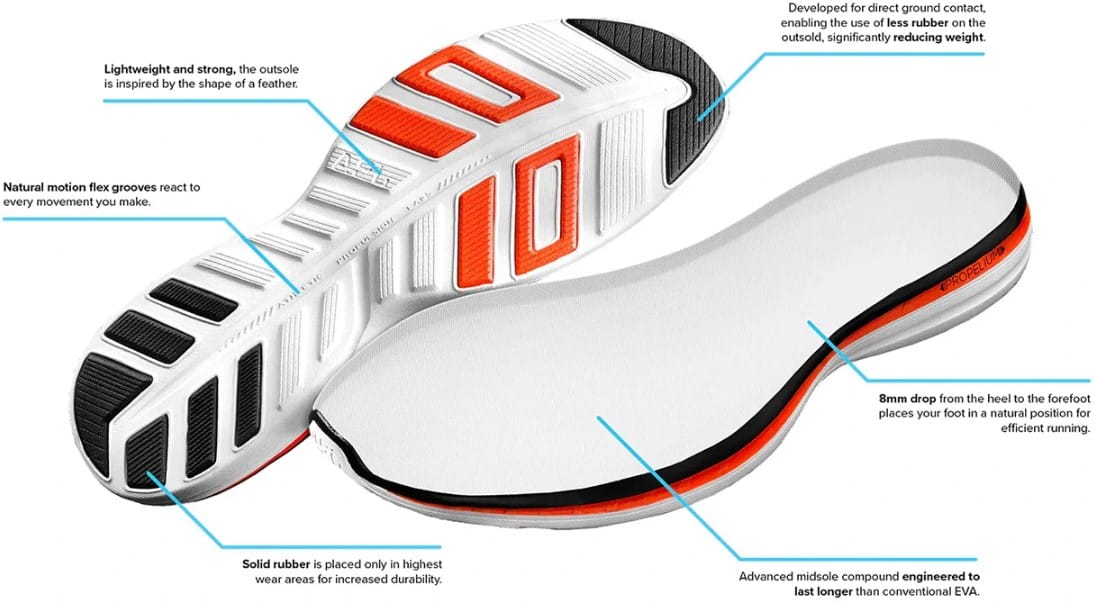
The starting line of a modern marathon looks very different than it did a decade ago. If you glance down at the feet of the person standing next to you, you aren’t just looking at foam and rubber; you’re looking at high-stakes engineering. We are living in the era of the “Super Shoe,” a period where the propulsion system inside your footwear is just as important as the engine inside a race car.
But as the market expands, a rivalry has emerged between two distinct philosophies of speed: the ubiquitous Carbon Fiber Plate and the Swiss-engineered Speedboard®. While both promise to turn your effort into forward momentum, they go about it in fundamentally different ways.
If you’re staring at a $250 price tag and wondering which “snap” is right for your gait, this guide is for you.
Understanding the Anatomy of a Modern Propulsion System
Before we pit them against each other, we have to understand what a propulsion system actually does. In the simplest terms, these plates act as a lever. When you land, the plate (sandwiched between layers of foam) resists bending. As your heel rises and you transition to your toes, the plate “snaps” back into its original shape, returning energy and helping to catapult you forward.
However, “energy return” is a bit of a misnomer. No shoe actually adds energy to your stride; rather, a high-quality propulsion system reduces the amount of energy lost at the ankle joint and minimizes muscle fatigue, allowing you to maintain a faster pace for longer.
The Rise of the Carbon Plate: The Gold Standard of Efficiency
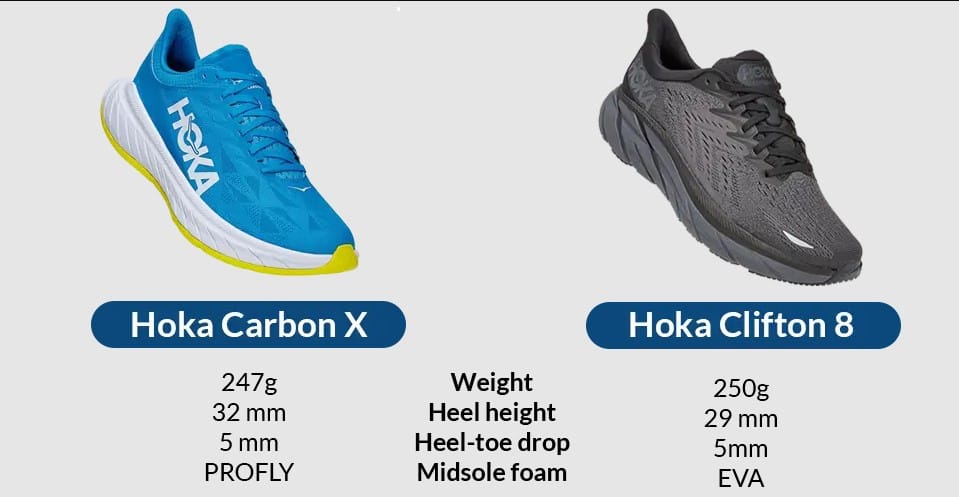
When Nike launched the Vaporfly in 2017, the carbon fiber propulsion system changed running forever. Since then, almost every major brand—Saucony, Adidas, New Balance, and Hoka—has followed suit.
How Carbon Plates Work
Carbon fiber is incredibly stiff and remarkably light. In a racing shoe, the plate is often curved into a “spoon” shape. This curvature creates a mechanical advantage called the “teeter-totter effect.” When you apply pressure to the forefoot, the plate encourages a rapid roll-off, essentially forcing your foot into the next stride before your muscles have to do all the heavy lifting.
The Pros:
Maximized Energy Return: Carbon is the king of “snap.” It offers the highest level of rigidity, which translates to the most aggressive forward lean.
Reduced Fatigue: By stabilizing the toe joints and reducing the workload on the calves, carbon plates keep your legs feeling “fresher” at mile 20 of a marathon.
The Cons:
Aggressive Geometry: Most carbon-plated shoes are designed for a specific way of running—usually a midfoot to forefoot strike. If your form breaks down and you start “heel-striking” heavily, the plate can feel awkward or even unstable.
High Price, Low Lifespan: These are the Formula 1 cars of shoes. They are expensive and often lose their “pop” after 200–300 miles.
The Speedboard®: A Different Kind of Propulsion System
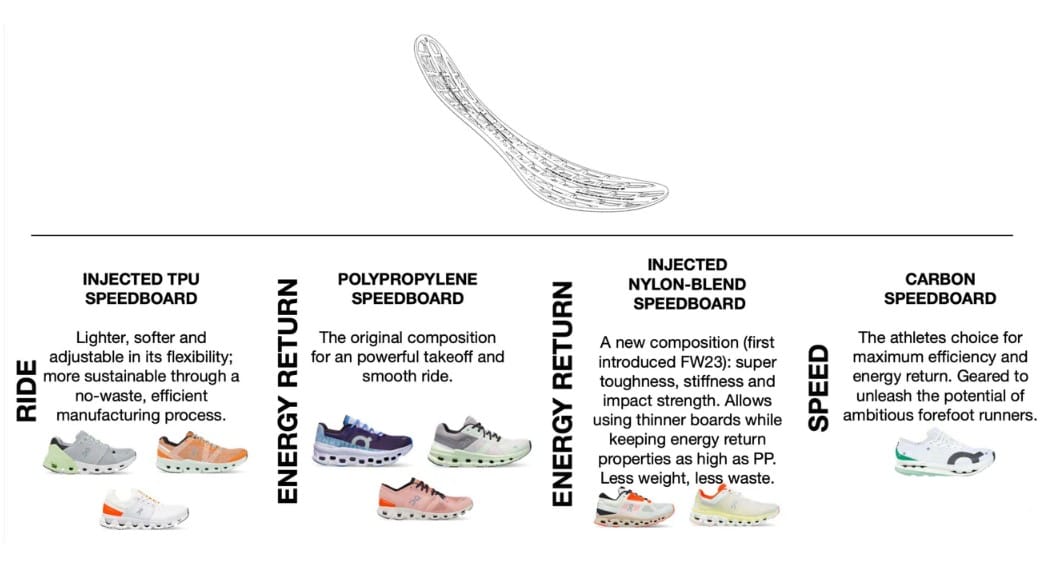
While the rest of the world went “all in” on carbon, the Swiss brand On took a different path with the Speedboard®. While On does use carbon in their elite-tier shoes (like the Cloudboom Echo), the Speedboard® is their foundational propulsion system found across their entire lineup.
How the Speedboard® Works
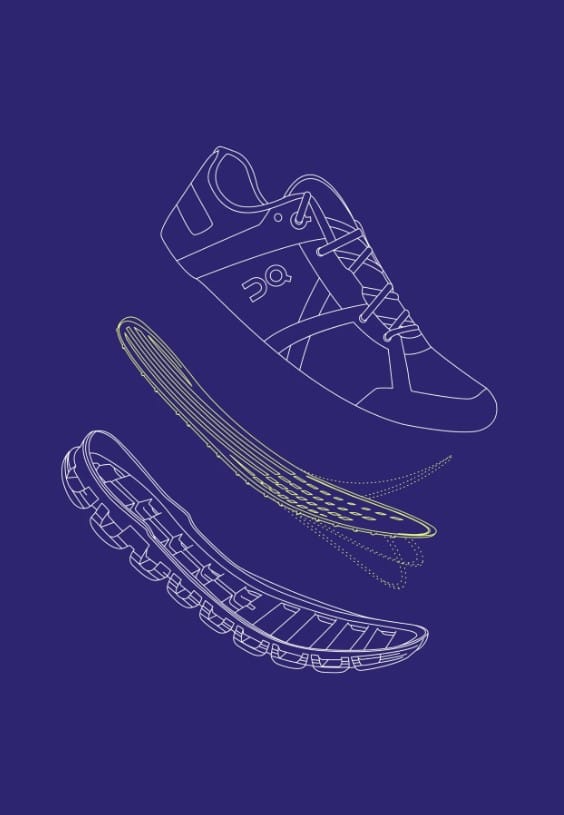
Unlike a generic slab of carbon, a Speedboard® is often made from high-quality polymers (like Pebax) or liquid-injected plastics. It is designed to work in tandem with On’s signature “Cloud” pods. As the pods compress during impact, the Speedboard® flexes. As you push off, it releases that tension.
The magic of this propulsion system is that it is often “tuned” for the specific shoe. A board in a daily trainer is wider and more flexible for stability, while the board in a racer is narrower and stiffer for speed.
The Pros:
Versatility and Comfort: Because the material isn’t as punishingly stiff as carbon, the Speedboard® feels more natural. It follows the foot’s natural rolling motion rather than forcing it into a specific path.
Stability: Carbon plates can feel “tippy” because of the high stack heights. Speedboards® are often integrated closer to the foot, providing a more “grounded” feel.
The Cons:
Lower Absolute Energy Return: If you are looking for the absolute maximum “bounce” possible, a polymer Speedboard® generally won’t match the explosive rebound of a full-length carbon plate.
Speedboard® vs. Carbon Plates: Choosing Your Propulsion System
Choosing the right propulsion system isn’t about which one is “better” in a lab; it’s about which one matches your biology.
1. Distance Matters
If you are racing a 5K or a 10K, the aggressive snap of a carbon fiber propulsion system is hard to beat. The shorter the distance, the more you can tolerate the stiffness in exchange for raw speed. However, for a half-marathon or a full marathon where comfort becomes a performance metric, a Speedboard® propulsion system might actually result in a faster time by preventing foot soreness in the final miles.
2. Running Form and Cadence
Carbon plates thrive at high cadences. If you have a powerful stride and a high turnover, you will “load” the plate effectively. If you have a lower cadence or a more relaxed “shuffling” gait, a carbon plate can feel like a stiff plank of wood. In this case, the more forgiving flex of a Speedboard® will feel significantly better.
3. Surface and Terrain
Carbon plates are almost exclusively designed for flat, smooth asphalt. They are notoriously unstable on turns or uneven surfaces. If your “race” involves light gravel, many turns, or varying inclines, the lateral stability of a Speedboard® propulsion system provides a safer, more confident ride.
The Hybrid Future: Can You Have Both?
The industry is currently moving toward a middle ground. We are seeing “nylon plates” and “carbon-infused” boards that attempt to bridge the gap. These offer a “best of both worlds” scenario: the durability and comfort of a Speedboard® with about 80% of the snap of a pure carbon plate.
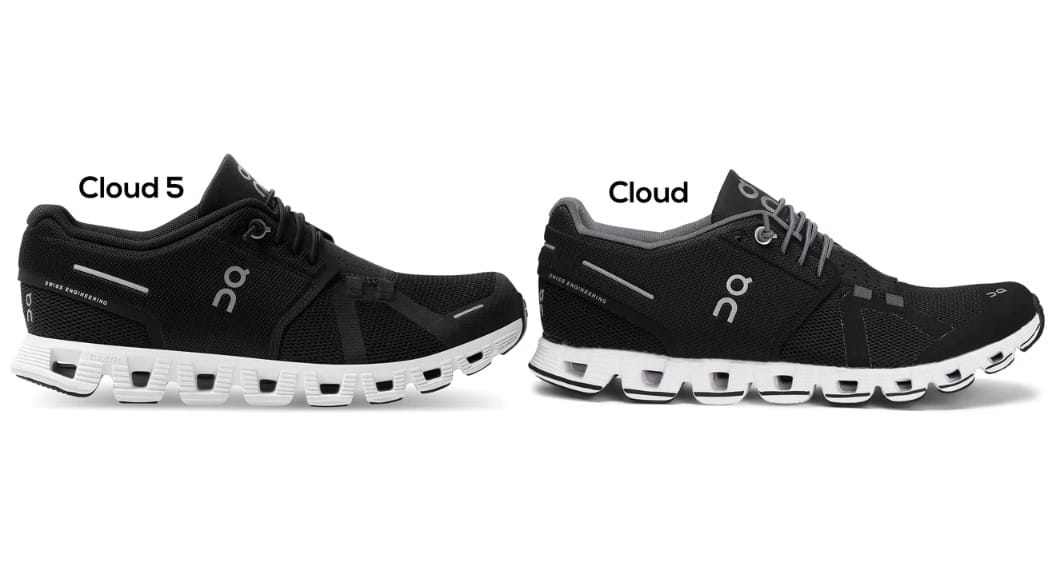
For most amateur runners—those of us not chasing an Olympic qualifying time—this middle-tier propulsion system is actually the “sweet spot.” It allows for fast training sessions and energetic races without the risk of “carbon-fiber-induced” injuries like stress reactions or plantar fasciitis, which can occur when the foot is forced to move in an unnatural way for too long.
Why “Human Feel” Trumps Lab Stats
At the end of the day, your brain is the ultimate judge of a propulsion system. There is a psychological phenomenon in running called “Preferred Movement Path.” Your body knows how it wants to move. If a carbon plate fights your natural path, you will burn more energy trying to stabilize yourself than you gain from the plate’s energy return.
When testing a new shoe, don’t just look at the clock. Ask yourself:
Does the “pop” feel like it’s working with my stride or against it?
Do I feel stable when I take a sharp corner?
After a fast mile, does my arch feel strained?
Conclusion: Which Propulsion System Wins?
The winner depends on your goal.
Choose a Carbon Plate if you are chasing a Personal Best on a flat road course, have a high-cadence midfoot strike, and don’t mind sacrificing shoe longevity for a “trampoline” feel.
Choose a Speedboard® if you value a natural transition, need a shoe that can handle both training and racing, or prefer a firmer, more stable connection to the road.
The propulsion system is a tool, not a magic wand. Whether you choose the Swiss precision of the Speedboard® or the explosive power of carbon, remember that the most important part of the “system” is the runner standing on top of it.
